
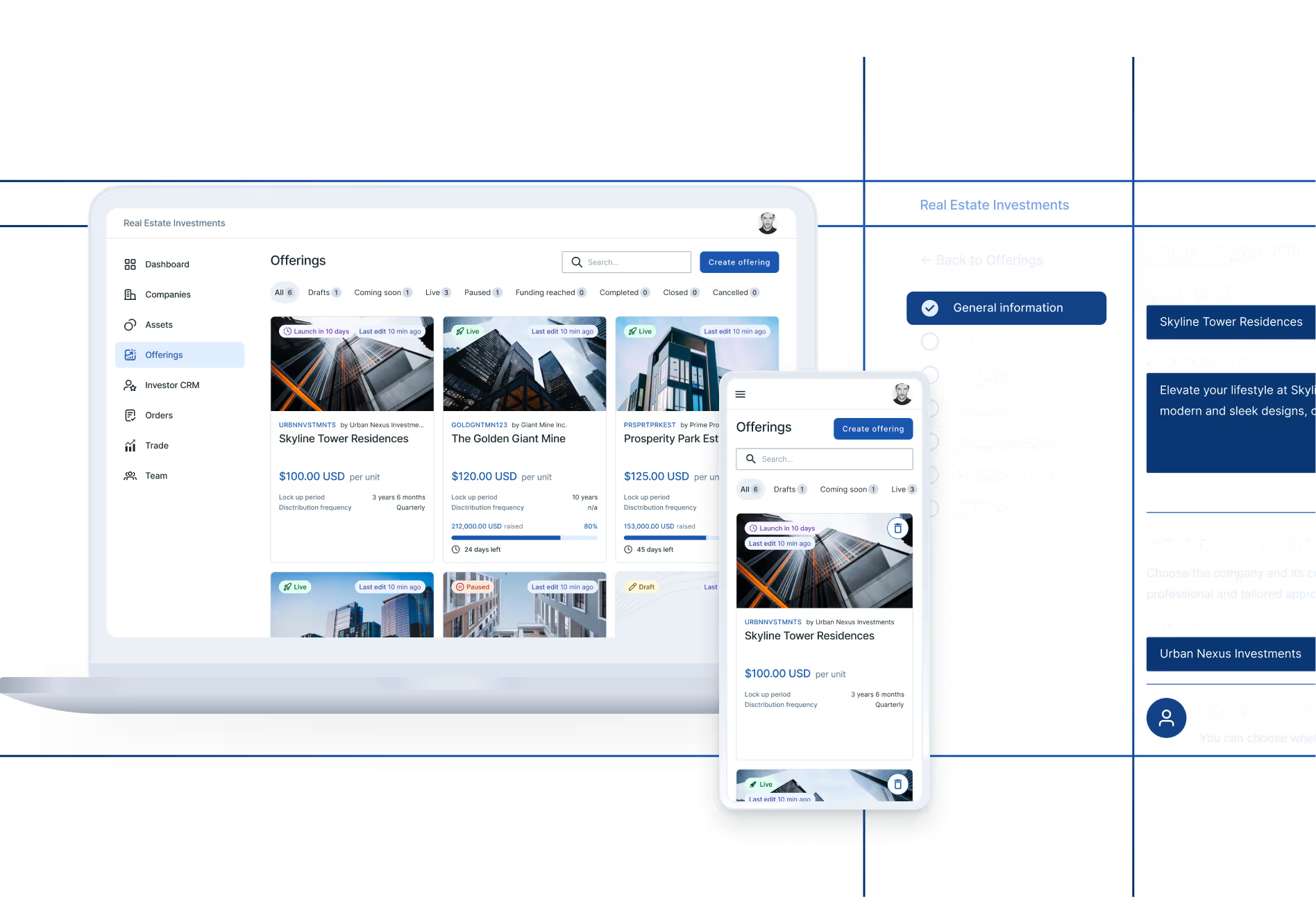
Polymath’s all-in-one white label solution makes digital securities easy to create, manage, and trade in a trusted environment tailored to your needs.
POLYX is the native utility token of Polymesh, the public permissioned blockchain purpose-built for the tokenization of regulated and real world assets.
POLYX is designed for use within the Polymesh ecosystem. It supports its operations and long-term sustainability by aligning the economic incentives of participants.
Within the Polymesh architecture, POLYX is used to pay transaction and protocol fees, secure the network through staking, and signal support within Polymesh’s onchain governance framework.
Polymesh uses a nominated proof-of-stake (NPoS) consensus mechanism to secure the network and provide deterministic settlement finality.
Node operators and nominators stake POLYX to participate in consensus and are rewarded or penalized based on network performance.
POLYX holders can signal support for changes to the Polymesh blockchain through onchain governance.
Governance proposals, known as Polymesh Improvement Proposals (PIPs), may include protocol upgrades or parameter changes and are reviewed through a structured process involving technical committees and the Governing Council.
POLYX is used to pay transaction and protocol fees for activity on the Polymesh blockchain.
Transaction fees are calculated based on transaction size and complexity. Protocol fees apply to certain native functions and may be updated by Polymesh governance. Polymesh does support transaction fee subsidization where one account can pay fees on behalf of another.
Fees are distributed to node operators who maintain the network, supporting ongoing operation and spam resistance.
POLYX is minted through block rewards under Polymesh’s nominated proof-of-stake consensus mechanism.
Block rewards are paid from newly minted POLYX and distributed to node operators and their nominators per era based on network participation and performance.
Rewards target a 70% staking ratio to balance security with token availability. Above this threshold, rewards decrease to discourage overbonding; below this threshold, rewards increase.
Annual minting is capped at a maximum of 14% of the total POLYX supply and transitions to a fixed issuance of 140 million POLYX per year once total supply reaches 1 billion POLYX.
For further detail on POLYX tokenomics, refer to the Polymesh whitepaper.